Rabies in Bali is a phenomenon that is important for every tourist in Bali to know. Before understanding rabies in Bali, it is better if we first understand what rabies is and how it occurs.
Rabies is a dangerous virus usually spread by animals, such as dogs, bats, foxes, lions, and monkeys. The rabies virus can be spread through saliva or bites from these animals.
Cases of rabies also occur in tourist cities such as Bali. As we know, Bali is one of the best tourist destinations in the world. Rabies in Bali cases can occur because there are many stray animals in Bali such as stray dogs and cats. These stray animals were usually unvaccinated, also including wild monkeys in forests where many tourists visit to sightsee their natural habitat. We need to be careful and be alert with these animals as there is a possible threat of them biting the visitors.
Although not all forest monkeys in Bali are positively contaminated with the rabies virus, we still need to protect ourselves from these animals’ bites because animals infected with the rabies virus cannot be seen physically. We can only know whether they are infected or not with expert check; thus, we need to be extra careful with every single encounter with these animals.
5 Best Tips to Avoid Monkey Rabies in Bali
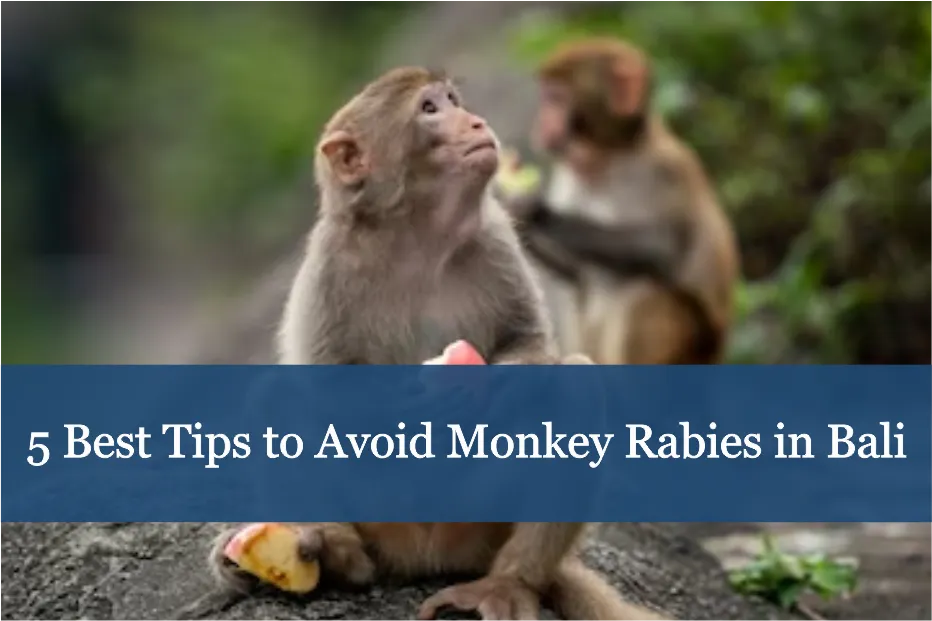
There are several things that need to be considered to avoid rabies for tourists visiting Bali. Here are the five top tips that can prevent rabies in Bali:
- Keep your distance from the forest monkeys.
- Do not bring food in plastic bags.
- Listen to every direction from the rangers.
- Leave food in your car.
- Wear safe clothing.
Self-preservation from the dangers of monkey bites on a trip to Bali is a crucial thing to pay attention to. This is because the impact of rabies is undoubtedly hazardous for a person’s body. Here are some explanations to better understand how to protect oneself from rabies when visiting Bali, along with a more in-depth explanation.
1. Keep your distance from the forest monkeys.
Travelling is a delightful thing, especially travelling to Bali, which is famous for its wealth of natural tourism. A trip to the jungles of Bali certainly means to be in a very close proximity to the presence of animals such as forest monkeys. These animals including the forest monkeys are very vulnerable to the rabies virus that can infect tourists who are bitten by them. Therefore, keeping a distance from these animals is crucial to avoid contamination from dangerous animal bites, especially when taking photos or capturing moments in forest locations.
2. Do not bring food in plastic bags.
Forest monkeys are ingenious animals, and they have a strong instinct for food brought by tourists. From just seeing or hearing the sound of plastic bag being brought around their area, they can tell that there is food inside it. The presence of plastic bags can thus attract monkeys and make them come closer to tourists. Therefore, as it is essential to maintain a safe distance from these animals, we need to pay attention to our behavior and conduct when walking around them. As we definitely do not want to attract animals to come closer, we should not bring any food in plastic bags when doing our visit to these areas.
3. Listen to the rangers’ instructions.
Every forest that is a tourist attraction in Bali has forest rangers who help clean and protect the habitat there. Because they work as forest rangers, they have already understood the habits and ways of living of the animals in the area. They know the times when the animals are active or when they are hunting for food, or when they are approaching their sleeping time. Therefore, all visitors need to listen to every direction from the forest rangers to avoid any dangers from contracting rabies in Bali.
4. Leaving food in your car
Food is one of the main factors that can provoke the animals in the forest to approach visitors or to come closer than expected to the tourists. To be safe, tourists should leave food in their car as food items can encourage the appearance of animals; besides, by not bringing food into the forest area, you will contribute to maintain the cleanliness and preserve the nature around the forest area.
5. Use safe clothing
Tourists need to pay attention to the clothes they are wearing when visiting the forest in Bali. This is because wearing more closed and safe clothing will provide more security when exposed to animal bites. When travelling to Bali, clothes that are safe to wear include long pants, raincoats and thick warm dresses.
The five top tips above are essential for every tourist who is coming to Bali because it will help to ensure your safety when visiting tourist attractions around the island.
Handling rabies in Bali that came from forest monkey bites
Rabies in Bali tend to be very dangerous for the public and for tourists in Bali. Someone who is bitten can be at high risk if the person:
- Has a deep bite wound
- Experiences multiple bites
- Gets bitten by forest monkey on vital areas such as the neck and head
- Gets bitten in the mucosal area such as the mouth, nose and other vital organs.
A person who is bitten and is affected by rabies in Bali must be treated quickly so that the virus does not spread throughout the body. The first treatment when someone is bitten is by washing the wound with clean and running water. In addition, we need to wash it with soap so that the bacteria will be lost. Here are some points to better understand how to wash wounds in relation to bites causing rabies in Bali. The following steps need to be taken,
- Immediately wash the bitten area until clean.
- After trying to clean it, immediately go to a clinic or rabies management center to get rabies vaccine injection. The doctor who is in charge will do a check and will determine the degree of wound. It will be determined whether that person needs an anti-rabies serum in addition to the vaccine.
- The dosage of rabies vaccine after getting bitten with wild animals is usually five times within the period of one month.
It is important to remember that when someone is bitten by a forest monkey, he must get a rabies vaccine immediately at the nearest clinic or hospital in Bali to avoid rabies in Bali.
VERORAB: Rabies Vaccination
Rabies is a deadly viral infection that affects the central nervous system and is most commonly transmitted to humans through the bite or scratch of an infected animal. VERORAB is a rabies vaccine designed to prevent this fatal disease. It contains inactivated rabies virus grown on Vero cells, which stimulates the body’s immune system to produce protective antibodies without causing the disease itself. This type of vaccine is widely used both for pre-exposure prophylaxis (before potential contact with rabies) and post-exposure prophylaxis (after a bite or scratch) to significantly reduce the risk of developing rabies.
One of the main advantages of VERORAB is its effectiveness in preventing rabies when administered according to the recommended schedule. For individuals at higher risk—such as veterinarians, animal handlers, laboratory workers, and travelers to rabies-endemic regions—pre-exposure vaccination offers long-term protection. After completing the primary vaccination series, booster doses help maintain immunity over time. Post-exposure use, when combined with proper wound care and, if necessary, rabies immunoglobulin, can prevent the disease even after exposure to the virus.
In addition to its protective benefits, VERORAB is generally well tolerated. Most side effects are mild and temporary, such as soreness at the injection site, redness, muscle pain, or low-grade fever. Serious adverse effects are uncommon. Because this vaccine contains non-live (inactivated) viral components, it can be used in various age groups including children and adults, and it is suitable for use in pregnant or breastfeeding individuals when clinically indicated, as delaying vaccination after exposure can be life-threatening.
The dosing regimen for VERORAB differs depending on whether the vaccine is given before or after exposure to rabies. For pre-exposure prophylaxis, a typical schedule involves three doses of 0.5 mL each given on days 0, 7, and either day 21 or 28. Booster doses are recommended one year after the initial series and every five years thereafter to sustain immunity. For post-exposure prophylaxis in individuals who have never been vaccinated, the vaccine is administered in multiple doses over several visits (for example, on days 0, 3, 7, 14, and 28). The schedule can be adjusted based on vaccination history and official health guidelines.
Overall, VERORAB plays a crucial role in both the prevention and management of rabies, one of the most feared and fatal viral infections. Its established dosing schedules and strong safety profile provide confidence in its use for at-risk populations and for rapid response following potential rabies exposure. Individuals with potential exposure should seek medical care immediately, as timely vaccination remains key to preventing this almost invariably fatal disease.

Rabies in Bali: VERORAB Rabies Vaccination at Saline Bali Clinic
In Bali, individuals seeking rabies vaccination with VERORAB can receive this essential preventive care at Saline Clinic Bali, a trusted medical facility located in Seminyak, Bali. Saline Bali Clinic provides a comprehensive range of vaccination services, including rabies vaccines for children, adults, and travelers in a tropical destination where rabies risk remains a concern. Before administering any vaccine, the clinic’s experienced medical team conducts a thorough health assessment to determine the most appropriate immunization plan for each patient. The clinic also offers flexible services, including in-clinic visits or at-home vaccinations, making it convenient for both local residents and international visitors to get protected safely and effectively.
What sets Saline Bali Clinic apart is its focus on professional care and patient comfort throughout the vaccination process. Vaccinations, including the rabies series with VERORAB, are handled by trained medical staff who follow strict clinical procedures and monitor patients post-vaccination to ensure optimal safety and response. After the vaccine is administered, the clinic provides a vaccination card and future dose schedule, helping patients keep track of follow-up shots when required. With its clean, well-equipped facility and attentive healthcare professionals, Saline Bali Clinic supports individuals in staying protected against rabies and other infectious diseases while in Bali.
Conclusion
Rabies in Bali remains a serious health concern for both tourists and local residents, particularly due to the presence of stray animals and forest monkeys in popular travel areas. Understanding how rabies is transmitted, recognizing high-risk situations, and following preventive measures—such as keeping distance from animals, avoiding carrying food, and following ranger instructions—are essential steps to reduce exposure. Immediate and proper wound care after any animal bite, followed by prompt medical attention, plays a critical role in preventing the virus from spreading and becoming fatal.
Vaccination is the most effective protection against rabies, and the VERORAB rabies vaccine provides reliable prevention for both pre-exposure and post-exposure cases. With proven safety, clear dosing schedules, and strong immune protection, VERORAB is a vital solution for anyone at risk of rabies in Bali. Supported by professional medical services at Saline Bali Clinic, individuals can receive timely vaccination and expert care, ensuring peace of mind while traveling or living on the island. Staying informed, cautious, and prepared is the key to enjoying Bali safely while minimizing the risks associated with rabies.
Frequently Asked Questions About Rabies in Bali

What is rabies?
Rabies is a viral disease that affects the nervous system and is usually transmitted through the bite of an infected animal, such as a dog or bat.
Is there a risk of rabies in Bali?
Yes, there is a risk of rabies in Bali. Rabies is endemic in Bali, and there have been cases of rabies transmission to humans.
How can I prevent rabies in Bali?
To prevent rabies in Bali, you should avoid contact with animals, especially dogs and bats. You should also get vaccinated against rabies before traveling to Bali and avoid handling animals that may be infected.
What should I do if I get bitten by an animal in Bali?
If you get bitten by an animal in Bali, you should immediately clean the wound with soap and water and seek medical attention. You may need to get vaccinated against rabies and receive post-exposure prophylaxis (PEP) treatment.
How do I get vaccinated against rabies in Bali?
You can get vaccinated against rabies at various hospitals and clinics in Bali. It's best to get vaccinated before traveling to Bali, but if you are already in Bali, you can still get vaccinated.
How effective is the rabies vaccine?
The rabies vaccine is highly effective in preventing rabies if administered before exposure to the virus or soon after exposure.
Can I still get rabies even if I have been vaccinated?
While the rabies vaccine is highly effective, it is still possible to contract rabies even if you have been vaccinated. However, the vaccine reduces the risk of rabies and makes the disease less severe if contracted.
What should I do if I see an animal that may be infected with rabies in Bali?
If you see an animal that may be infected with rabies in Bali, such as a dog or bat, you should avoid contact with the animal and report it to the local authorities or animal control.
Is it safe to pet dogs in Bali?
It is not recommended to pet dogs in Bali, as many dogs in Bali may be infected with rabies. It's best to avoid contact with dogs and other animals to prevent the risk of rabies transmission.
What are the symptoms of rabies in humans?
The symptoms of rabies in humans can include fever, headache, muscle weakness, and a tingling sensation at the site of the bite. As the disease progresses, symptoms can include hallucinations, difficulty swallowing, and respiratory failure.